An engagement ring is a piece she will wear every day for the rest of her life, so it is worth a little planning. A lab grown diamond engagement ring gives you a real diamond at a far better price than a mined stone. Follow these five steps and you will choose with confidence.
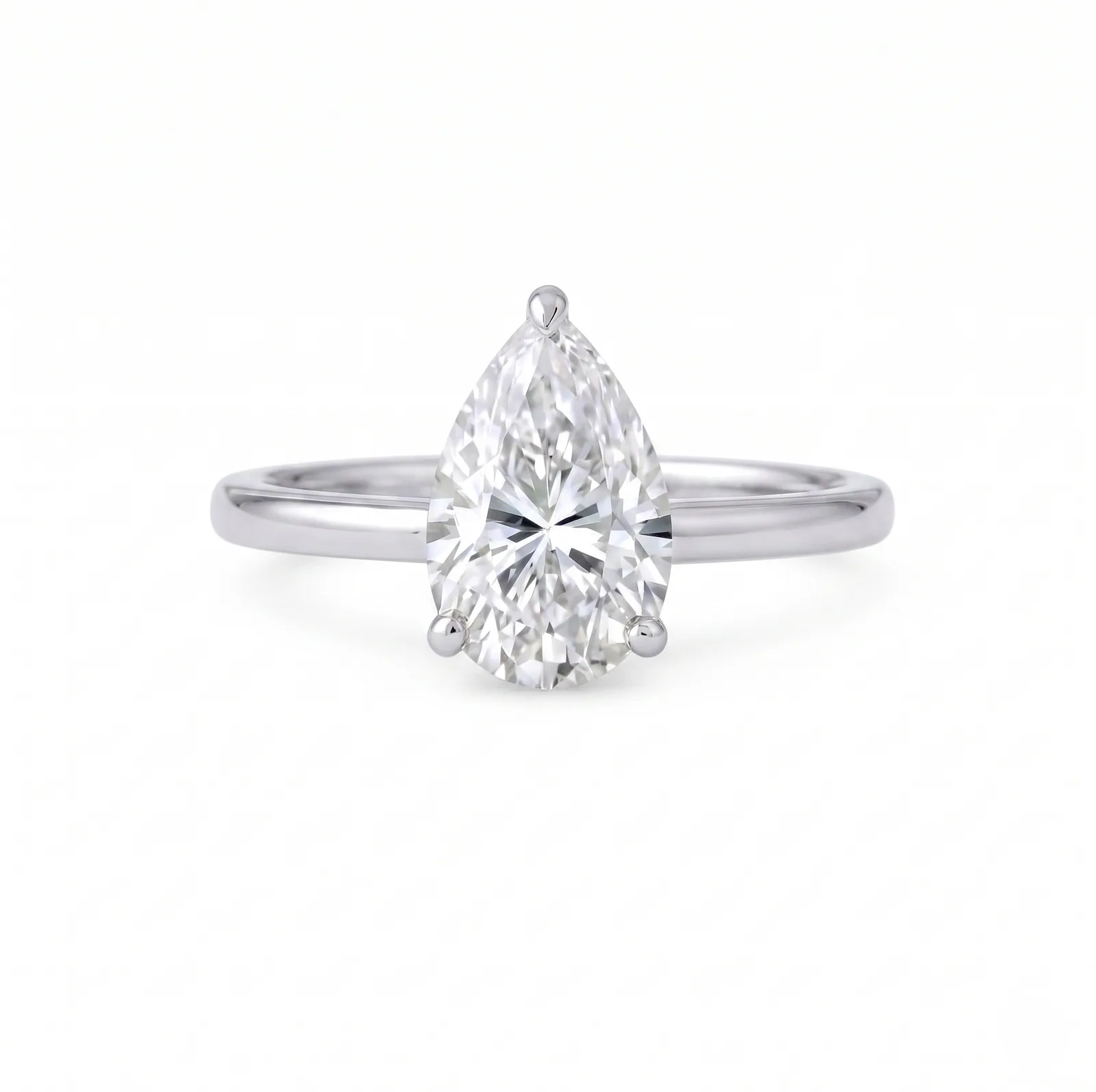
The shape sets the personality of the ring. Round is the most brilliant and timeless. Oval and pear look larger for their weight and lengthen the finger. Emerald and Asscher cuts feel elegant and vintage. Princess and cushion cuts are modern and bold. Not sure? Read our diamond shapes guide.
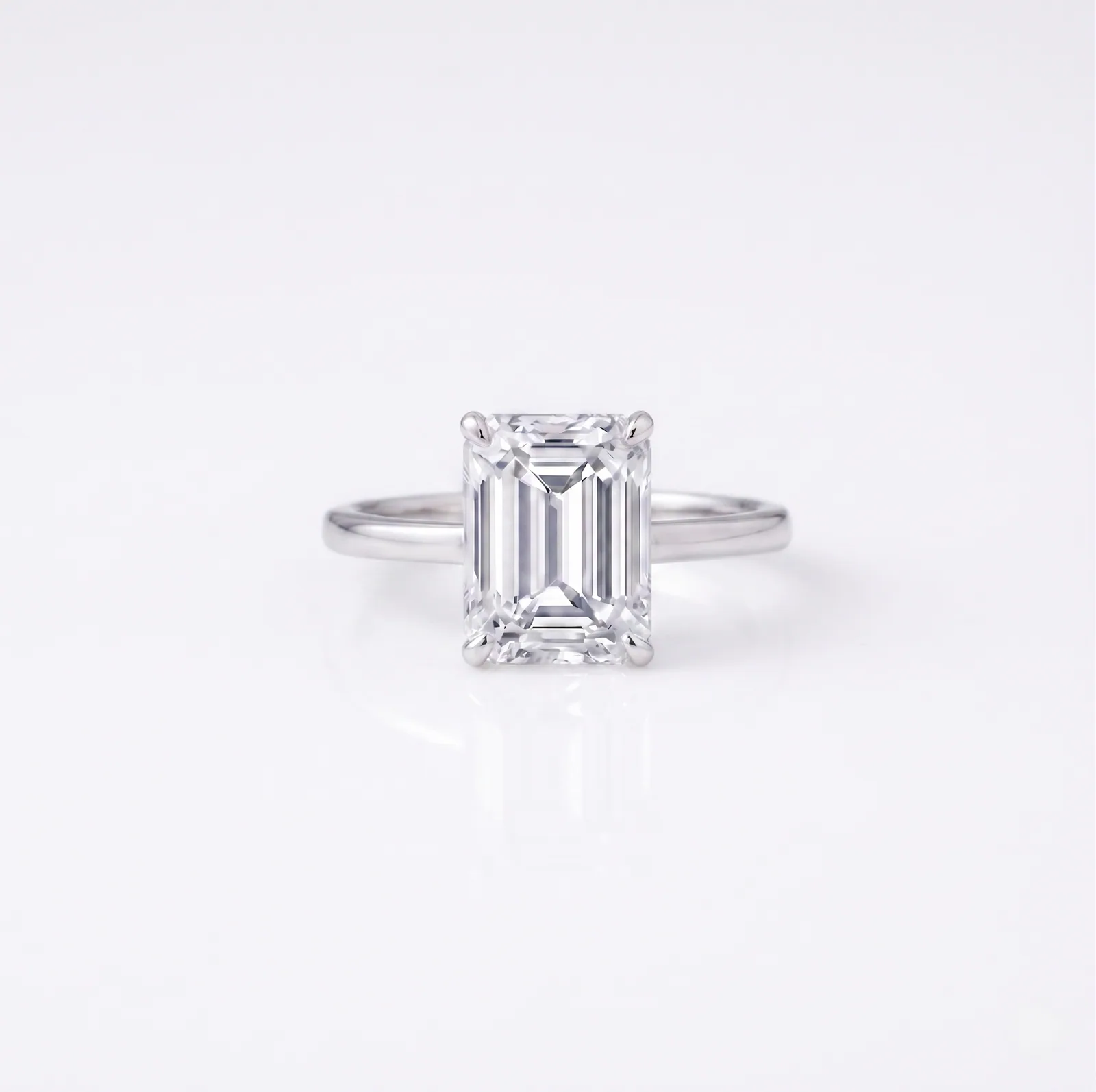
Carat is the weight of the diamond, and it drives most of the price. Because lab grown diamonds cost less, many couples move up a size. Our solitaires come from 0.50 ct to 3 ct, and you see the price for each size on the product page before you order. A well-cut 1.5 ct often looks better than a poorly cut 2 ct, so do not chase carat alone.
Every metal comes in white, yellow or rose. The colour never changes the price; the metal does. Compare them in our metal guide.
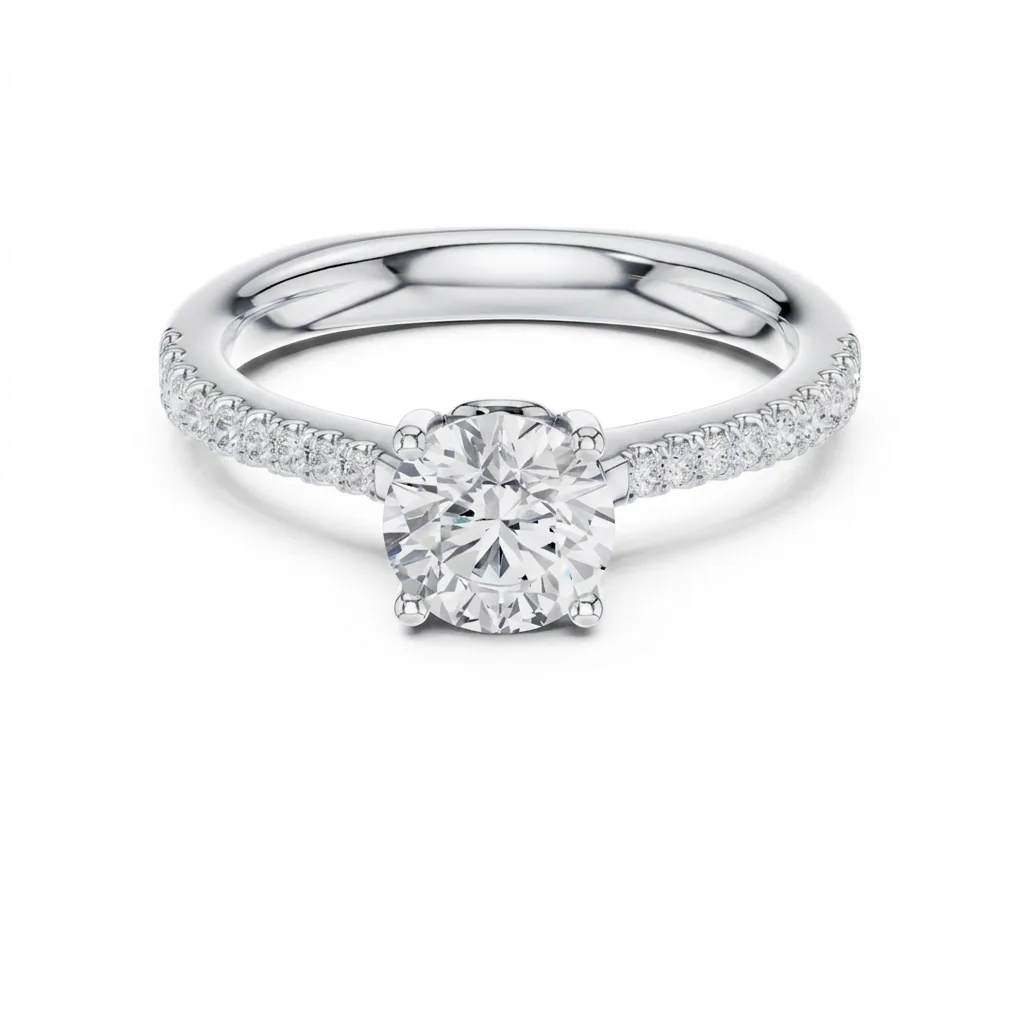
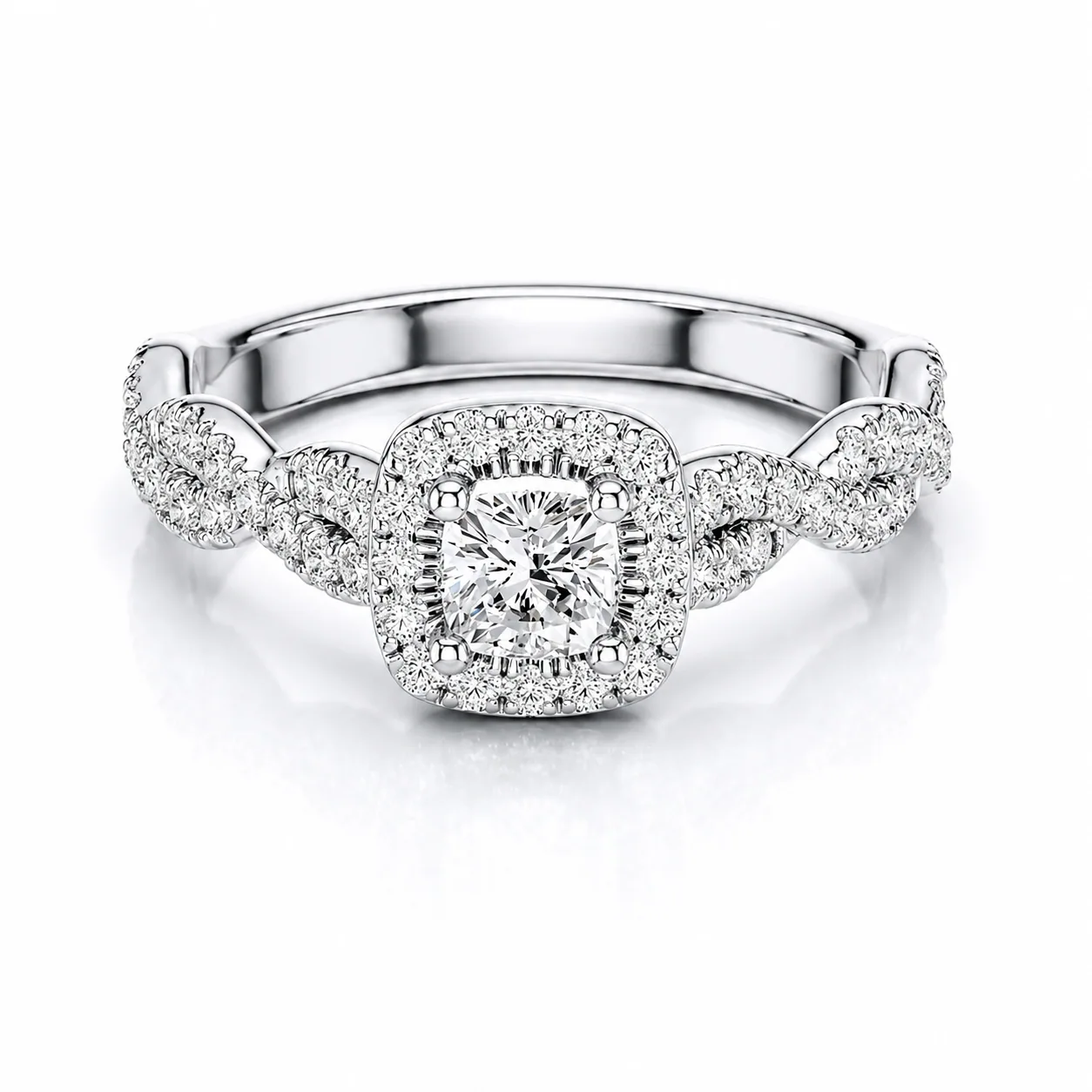
A solitaire puts all the attention on one diamond and never goes out of style. A pavé band adds small diamonds along the shoulders for extra sparkle. A halo circles the centre stone and makes it look bigger.
Each product page has a size guide. The easiest way is to measure the inside of a ring she already wears on her ring finger. If you are unsure, choose the size that fits the knuckle comfortably; a little loose is easier to fix than too tight.
Planning a proposal? Send us her style and your budget on WhatsApp and we will suggest the right ring.
Shop lab grown diamond jewellery · Ask for a price or a custom design
Between 1 ct and 2 ct is the most popular range for lab grown engagement rings. Our solitaires are offered from 0.50 ct to 3 ct, and the price updates as soon as you pick a size.
14Kt gold is the best everyday choice because it is hard-wearing. 18Kt gold has a richer colour. 925 sterling silver keeps the price low and suits a first ring or a fashion ring.
Borrow a ring she wears on the ring finger and measure its inside diameter, or ask a close friend. Our size guide on each product page converts the measurement for you.
Each ring is made to order. Most pieces take 7-15 business days to make, then 3-7 business days to deliver in India or 7-15 business days abroad.


